Welcome to 240sxONE 
Welcome to 240sxONE Tech... We hope to become the best single resource for S13 and S14 technical information on the web. If there is something you think we're missing that you'd like to know, or you find that something we do cover is incorrect or incomplete, please let us know. This resource is built on the knowledge and know-how of our members.
-The 240sxONE Staff
Speakers
If your 240sx is Still equipped with factory speakers, it is highly recommended that you replace them. Even on a well kept, low mileage vehicle the foam surrounds are likely rotted beyond repair simply due to age (this was even apparent on a well kept low mileage S14 Kouki). Complete speaker replacement will benefit audio quality more than any other Stereo upgrade
Speaker Sizes:
S13 Front (Door): 4″x6″*, 2″ depth
S13 Rear (Hatch, Side Panel): 4″x6″*, 2.5″ depth
S13 Rear (coupe, Deck Lid): 6.5″**, 2.8″ depth
S13 Rear (Convertible, side panel): 6.5″, 3″ depth
S14 Front (Door): 6.75″ (aka oversized 6.5″), 2.8″ depth
S14 Front (A-Pillar): 3/4″, with 1/2″ depth (non-standard mounting)***
S14 Rear (Deck Lid): 6.75″ (aka oversized 6.5″)**, 2.8″ depth
- Any speaker can be replaced with one that is smaller using any number of generic adapters
- Extra depth can be obtained with a spacer, however this shrinks the space between the speaker face and the grill
*Note: The 4×6″ speakers can be replaced with 6.5″ speakers using adapter from MJM Auto Innovations. These adapter plates replace the factory speaker mounts and plastic “bucket”**
**Note: This speaker configuration leave the back side of the speaker open to air. It’s recommended that you buy a generic acoustic foam baffle to improve the sound reproduction. In areas such as doors where the factory mount and acoustic bucket has been removed this will also protect your speaker from water and dirt that finds its way into this area. XTC makes a number of acoustic foam baffles in various sizes.
***Note: The factory tweeters use a non-standard mounting configuration, this means that aftermarket tweeters will not bolt in to the stock location. Similarly there is no factory stand-alone cross over network; the tweeter wiring is simply split from the main front drivers somewhere on the harness, The tweeter wiring is not-accessible while the dashboard is installed in the car.
If replacing the tweeters with component speaker system you will be required to develop a custom mounting solution as well as run new speaker wire to the tweeters from the aftermarket cross-over network. If working with a car that was originally equipped with a trunk-mounted external amp there is ample room to mount the cross-over networks on the rear dech lid and splice into the factory wiring here; running fresh speaker wire to the front of the car for the tweeters. For cars with out an external amp there is ample room behind the door cards for mounting the cross over network.
Wiring
When installing an Aftermarket Head Unit it is highly recommended that you do not cut the factory wiring and instead use an appropriate integration harness as listed below:
Installation Harnesses:
S13 Head Unit:
- Metra 70-1763
- Scosche NN02B
S14 Head Unit (Without external Amp):
- Metra 70-7550
- Scosche NN03B
S14 Head Unit (with external Amp):
S14 Amp Bypass/Delete Harness:
S13/S14 Antenna:
- Metra 40-NI11 (Non Diversity) <-recommended for most installs
- Metra 40-NI10 (Diversity)
- Metra 40-NI30 (Diversity/Set)
- Scosche NDAB
S14 Speaker Harness:
- Metra 72-7400 (converts the Nissan speaker connector to quick disconnects for front rear and tweeters)
S14 BlueTooth Integration Harness:
- Metra BT-7550 (allows for a device to be installed in-line with the Factory stereo)
Repair Harnesses:
Use these to repair the OEM stereo connector if yours was removed or damaged, Antenna connectors are for use to adapt an aftermarket antenna to the OEM Stereo.
S13 Stereo:
- Metra 71-1763
- Scosche NN02RB
S14 Stereo:
- Scosche 71-7550
- Scosche NN03RB
S13/S14 Antenna:
- Metra 40-NI20 (Diversity)
- Metra 40-NI21 (Non-Diversity)
- Metra 40-NI30 (Diversity/Set)
- Scosche NDARB
Trim/Mounting
Both the S13 and S14 use a standard “executive double din” sized slot for the audio head unit. Depending on Audio package that your 240sx was originally equipped with the factory head unit may take up both slots, or it may have been a single din head unit with a single din sized pocket below. A single din or double din sized stereo should fit without issue.
S13/S14 Din Pocket:
- Metra 98-7499
- Scosche NN2155B
S13 Mounting Bracket:
- Metra 99-7400
- Metra 99-7407
S14 Mounting Bracket:
- Metra 99-7409
- Metra 99-7417 (w/integrated din pocket)
If you’ve converted your S13′s pop-up headlights to fixed headlights from an S13 Silvia you probably realized that just about all the electrical connectors plug right in without any problem. The only exception being the fog lights. All 3 variations of the Silvia headlights include fog lights (Bricks, Dual Projectors, and Triple Projectors) The fogs are the inner most lamps on each of these headlight variations and they’re all wired the same. Thankfully they are also rather simple to wire up.
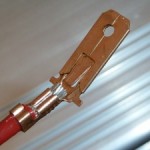
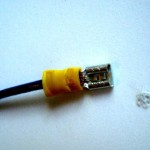
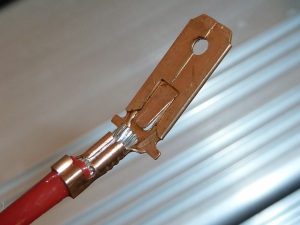
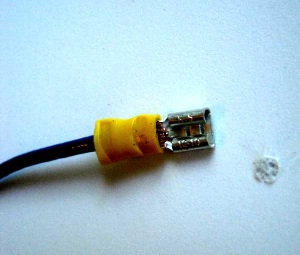
The only parts you will really need are four female spade connectors, as well as a pair of pigtail connectors from the pop-up headlight motors.

If your old pop-up motors were junk then there’s no harm in simply cutting off the connectors, if your old pop-up motors were good, I would recommend finding someone with some junk motor who is willing to cut the connectors off for you, else you’d ruin your good motors.

Start by cutting off all of the wires except for the brown and black wires. Normally I’d recommend de-pinning the unused wires, however since this connector will see the elements you’re better off leaving the old wires in there to plug the holes and keep water out of the connector.


If your motor leads are long enough you could probably get away with simply putting the spade connectors on the ends of the wires as is, however I opted to extend the connectors a number of inches to ensure I had ample slack in the wiring.

I recommend using spade terminals with a protective sheath to prevent accidental shorting. I used crimp on style terminals simply because it’s what I had available, if you’re more comfortable using a solder-type then by all means use those.

The motor connector side of your new harness can plug in right where you old pop-up motors used to plug in. The female spade connectors attach directly to the back of the fog light bulb and lamp housing. The black wire is 12V and connects to the housing (S13 headlights use a common hot configuration), the brown wire is ground and attaches to the male spade wire coming off of the bulb.

If your headlights didn’t include fog light bulbs you will need to pickup a pair of Standard “H3″ bulbs from your local auto parts store, the same bulb is used for all S13 Silvia headlight types. I’ve seen people claim that these are “hard to find” but I was able to get them at my local AutoZone..
At this point you should be able to turn your fog lights on and off using the Pop-Up Retraction button in your dashboard (the button that used to put the pop-ups up and down). Though since with pop ups you want the headlights up when on, the button only really controls them with the headlights off, and you’re forced to have them on all the time when your headlights are on.

If you want to independently control your fog lights on or off regardless of whether or not your headlights are on then all you need to do is remove “Headlight Retractor Relay #4″; it’s the gray relay in the fuse box behind the battery, Simply pull it out and the button in the dash will now control the fogs independent of the headlights.
BE WARNED: Like the headlights, the fog lights can be turned on even when the car is not, however unlike the headlights you wont get the warning chime should you forget about them and leave them on. So remember to turn them off when you park your car or you’ll come back to a dead battery.
Filed Under (Engine, LS1) by twistedsymphony on 14-03-2010
I just went though the wiring for AC on the Vette and the Camaro into an S14… it’s actually pretty simple.
The HVAC electrical diagrams for the S14 span 6 pages, the Vette diagram doesn’t even fill 1.
Components needed
-LS AC compressor (duh)
-LS AC Pressure Sensor (might want to get the line it attaches to as well)
-An AC Relay (the Factory Relay in your S-chassis will do just fine)
-Your ECU needs to be programmed for a “Manual HVAC” setup (not “Automatic”)
This wiring works for engines sourced from LS1 equipped Corvettes, Camaros, and Firebirds.
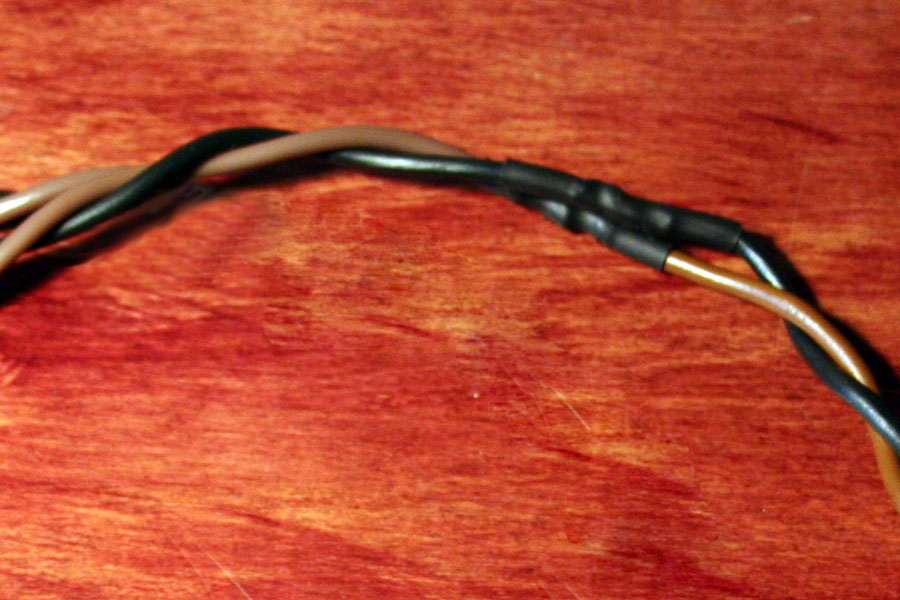
1. AC Compressor has 2 pins: One for 12V and one for ground, this is switched on by the Relay. What you’re doing here is simply cutting off the S14 AC connector ( on the drivers side near the steering rack) re-routing to the right side of the bay and soldering on the LS connector.
-Pin A on the LS connector is Dark Green and replaces Pin 1 on the S14 Compressor Connector E46 which is Yellow with a Red Stripe (switched 12V source)
-Pin B on the LS connector is Black and replaces Pin 2 on the S14 Compressor Connector E46 (ground)
2. AC Pressure Sensor has 3 pins, a ground reference, a 5V reference and an output signal, all 3 feed directly into the LS harness and directly to the ECU
-Pin A on the LS connector for the Corvette it is Black and goes to Blue#60 on the ECU harness, for the F-Body it is Purple and goes to Red#57 on the ECU harness (Ground Reference)
-Pin B on the LS connector is Gray and goes to Blue#45 on the ECU harness (5V Reference)
-Pin C on the LS connector is Red with a Black Stripe and goes to Red#14 on the ECU harness (Sensor Signal)
3. There are a few connections at the F3 plug, allowing easy integration with the S14 for turning on/off ac F3 pins are based on the diagram here: http://forums.240sxone.com/showthread.php?t=7091
-Pin 32 on the F3 connector is Yellow with A Black stripe and goes to Red#17 on the ECU which is Dark Green with a White stripe (AC On signal from HVAC)
-Pin 43 on the F3 connector is Black with a Pink stripe and goes to Red#43 on the ECU harness which is Dark Green with a White stripe (Compressor Relay turn on signal)
-Pin 44 on the F3 connector is Blue with a Red stripe and goes to Red#18 on the ECU harness which is Dark Green (AC Clutch Status)
4. The Triple pressure switch found on the S14 Dryer isn’t needed for the LS AC setup so it needs to be bypassed, this is located near the battery tray.
-S14 connector E29 Jump pin 1 (Black with pink Stripe) to pin 4 (Green with Yellow Stripe), the other 2 pins can be left as is, one goes to the F3 plug and isn’t used, the other goes to ground
*Note: there are about a dozen other AC related pins on the F3 plug, none of these are needed so you can just de-pin them to clean up the plug.
For Reference here are the FSM Diagrams for the F-Body and Y-Body

Filed Under (Engine, LS1) by twistedsymphony on 08-02-2010
The Problem:
Many people who swap an LS series motor into their 240SX or RX-7 tend to complain that the power steering pump is simply too powerful for the chassis. The steering ends up feeling “disconnected” since there is almost not feedback though the steering wheel.
The pumps run notoriously hot too, enough such that later model LS equipped vehicles come standard with a power steering cooler.
TurnONE:
There is however a company that specializes in Performance Power Steering Pumps; TurnONE. I heard about them after I read an article on GM High Tech Performance of their replacement pump and pulley products. Their pump not only fixed the overheating issue, but it improved steering feedback, improved the engine performance by several hp across the board.
I called them up explaining that my 99Vette LS1 was going into a Nissan and I wanted to know if they had a larger pulley that would effectively reduce the pump speed. I was told that a new pulley wouldn’t really solve my problem and rather than spending money on a whole new pump I could get the reduced flow and improved feedback I was looking for by simply replacing the output nozzle with one that had reduced output. This product isn’t listed anywhere on their site, you’ll have to call to order it. The reducer ran me about $40 shipped, which is half the price of a new pulley, and about 1/5th the price of one of their high performance pumps.

Tools Needed:
- Power Steering Pulley Remover/Installer Kit (can be rented from Autozone for $30)
- torque wrench
- 22mm socket
- 14mm, 17mm, 21mm open end wrenches
Installation:
1. Remove parts to get at the pump
Because of the location of the output nozzle you’ll need to remove the pulley from the pump. So that also means you’ll have to remove the accessory belt and disconnect the high pressure power steering line from the pump as well. I hadn’t installed these pieces on my car yet because I knew I would need to install the reducer first. Also depending on the placement of things in your engine bay you may have to remove other items too, for instance I removed the intake.

2. Remove the Pulley
The next thing you’ll want to do is to remove the pulley. The removal tool hooks onto the snout of the pulley with 2 sleeves.
once both sleeves are placed on there is a collar that slides over them to hold them in place.

Using a 19mm wrench to hold the base and a 17mm wrench at the tip; tightening the bolt will “pull” the pulley off of the shaft.

3. Remove the old Nozzle
Once the pulley has been removed you can remove the old high pressure nozzle. This requires a 22mm socket, or wrench. Depending on the placement of your power steering pump you may have to remove other things too, I removed a near by idler pulley to give my ratchet some breathing room.

Be careful once the nozzle is almost out, it’s spring loaded and you’ll have a stopper and spring fly out of the pump once the nozzle is removed.
4. Install the new Nozzle
The difference between the original GM nozzle (left) and the new Turn One nozzle (right) is pretty clear.

Make sure you place the spring and stopper back in the pump before installing the nozzle, if you lost track this picture will show you the order and position required for re-installation:

With the stopper and spring back in place tighten the nozzle back down. Use your torque wrench and torque it down to 55ft-lbs.
If you need to re-install a near-by idler pulley like I did, than that will need to be torqued to 18ft-lbs. Also most accessories require their bracket bolts are torqued to 38ft-lbs.
5. Re-Install the Pulley
To get the pulley back on you’ll have to use a pulley installation tool, this is nothing more than a large bolt with a large pusher nut. Turn the pusher so it’s up near the head of the bolt then place the pulley on the bolt like a giant washer. Thread the bolt into the center-bore of the pump shaft. Thread the bolt all the way in then turn it back out once or twice. Then hold the bolt in place and turn the pusher until it’s snug against the pulley, make sure the pulley is lined up properly with the shaft.

Use a 21mm wrench on the pusher and a 14mm wrench on the bolt head. You’ll want to hold the bolt in place and turn the nut, opposite of what you did when removing the pulley.

6. Put everything back together
You’re pretty much done, just re-install anything that removed to get to the pump and enjoy your improved steering response.
Filed Under (Part Lists) by twistedsymphony on 14-11-2009
| Part Number |
Description |
Model and years |
Invoice |
MSRP |
| CHASSIS AND SUSPENSION |
|
|
|
| 11210-RS540 |
Engine Insulators RH engine |
240SX 1989-1998 |
$60.87 |
$86.96 |
| 11220-RS540 |
Engine Insulators LH engine |
240SX 1989-1998 |
$60.87 |
$86.96 |
| 11320-RS541 |
Engine Insulators Transmission |
240SX 1989-1998 |
$34.90 |
$49.85 |
| 54420-RNS40US |
Strut Tower Brace (Front) Designed to reduce movement of the strut towers during hard cornering. Handling and sterring response will improve. |
240SX 1995-1998 |
$192.47 |
$274.96 |
| 55420-RNS40US |
Strut Tower Brace (Rear) Designed to reduce movement of the strut towers during hard cornering. Handling and sterring response will improve. |
240SX 1995-1998 |
$198.05 |
$282.93 |
| 54480-RSS30US |
Power Brace Designed to reduce movement of the tension/control arms during hard cornering. Handling and steering response will improve. |
240SX 1989-1994 |
$132.09 |
$188.70 |
| 54480-RSS51US |
Power Brace Designed to reduce movement of the tension/control arms during hard cornering. Handling and steering response will improve. |
240SX 1995-1998 |
$109.91 |
$157.02 |
| 54476-RS590 |
Bushings FR Tension Rod |
240SX 1989-1998 |
$23.67 |
$33.82 |
| 54560-RS590 |
Bushings FR Transverse Link |
240SX 1995-1998 |
$24.20 |
$34.57 |
| 55045-RS580 |
Bushings RR Suspension Arm |
240SX 1989-1994 |
$16.15 |
$23.07 |
| 55152-RS520 |
Bushings RR Axle RR |
240SX 1989-1993 |
$8.25 |
$11.78 |
| 55157-RS580 |
Bushings RR Suspension Link(4), LWR link RR(2) |
240SX 1989-1994 |
$12.17 |
$17.39 |
| 56217-RS580 |
Bushings RR Shock Absorber Rod UPR |
240SX 1989-1998 |
$4.44 |
$6.34 |
| ENGINE |
|
|
|
| 21200-RS520 |
Thermostat Opens at 62C(169F), Nissan OE thermostat opens at 76.5C(195F) |
240SX 1989-1998 |
$44.07 |
$62.96 |
| 21430-RS012 |
Radiator Cap Rated at 1.3kg/cm(18.2 lbs), Nissan OE caps rated at 0.9kg/cm(12.6 lbs) and 1.2kg/cm(16.8 lbs) for Nissan OE turbo vehicles |
All Vehicles 1984-current |
$23.13 |
$33.04 |
| 22670-RR580US |
Fuel Pressure Regulator Adjustable to 10Ka/L/h with a 250m/sec flow rate |
240SX 1989-1998 |
$85.03 |
$121.47 |
| 22670-RR710US |
Fuel Pressure Regulator Adjustable to 10Ka/L/h with a 250m/sec flow rate |
Universal |
$85.03 |
$121.47 |
| 22672-RR710 |
Fuel Pressure Regulator Bracket for 22670-RR710US |
Universal |
$23.62 |
$33.74 |
| DRIVETRAIN |
|
|
|
| 30100-RN225US |
Clutch Disc Sprung center and composite lining. Requires OE throwout bearing |
240SX 1989-1998 |
$131.38 |
$187.69 |
| 30210-RS600US |
Clutch Cover Pressure: 750kg |
240SX 1989-1998 |
$204.39 |
$291.98 |
| 38420-RS661 |
Limited Slip Differential 4-pinion, 70 lb-ft breakaway torque |
240SX 1989-1998 w/o OE LSD |
$627.11 |
$895.87 |
| 38420-RS662 |
Limited Slip Differential 4-pinion, 70 lb-ft breakaway torque |
240SX 1989-1998 with OE LSD |
$627.11 |
$895.87 |
| INTERIOR |
|
|
|
| 32865-RN003 |
Shift Knobs Dark Gray Leather |
All manual trans vehicles |
$27.91 |
$39.87 |
| 32865-RN006US |
Shift Knobs White Ball Type |
All manual trans vehicles |
$29.20 |
$41.71 |
| 32865-RN007US |
Shift Knobs Black Ball Type |
All manual trans vehicles |
$29.20 |
$41.71 |
| 32865-RN011US |
Shift Knobs Black rubber race knob |
All manual trans vehicles |
$35.91 |
$51.30 |
The Vehicle Speed Sensor used by the T-56 and other transmissions popular with the LSx swap output a signal in the 4000 pulses per minute range. Unfortunately the Speedometer in the 240sx requires a signal in the 2000 pulses per minute range.
One option is to buy a Dakota Digital SGI-5 “Universal Speedometer Signal Interface“. These go for about $80 and will wire up easily.
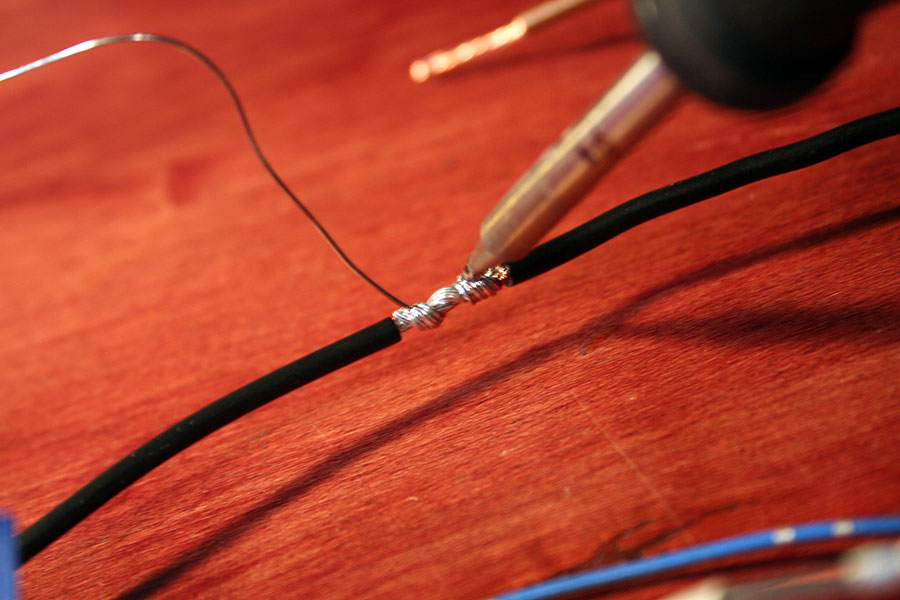
Since the conversion being applied to the signal is fairly straight forward (cut the pulse rate in half) building a circuit to deal with this change is pretty straight forward.
Read the rest of this entry »
Filed Under (Interior) by twistedsymphony on 02-10-2009
Maybe you want to modify your gauge cluster, or maybe you need to replace a broken one, or maybe you bought a JDM cluster and want to swap it in. Either way, replacing the gauge cluster in an S14 is a quick and simple process.
Read the rest of this entry »
Filed Under (Drive Train, LS1) by twistedsymphony on 28-09-2009
If you’re swapping a T-56 6-speed into your 240 along with your LSx then you will need to replace the factory Nissan clutch master for something more beefy, along with that you’ll also need to make your own custom hydraulic clutch line as well as a custom bleeder line. This guide will walk you through the steps of constructing these parts as well as installing them. Keep in mind that this is only one possible way to accomplish this, like most custom swaps there are many different ways to get things done. This guide represents the most commonly used parts and method of accomplishing this.
Read the rest of this entry »
Filed Under (Engine, KA24DE) by twistedsymphony on 27-09-2009
Whether you’re putting your car on an engine bay diet, trying to stick it to mother nature, or something else altogether (in my case I had a leaky EGR tube) removing the EGR system from a KA24DE is a fairly popular modification. In this guide I show you step by step how to remove it without having to tear apart your whole car in the process.
Read the rest of this entry »
Filed Under (LS1) by twistedsymphony on 13-09-2009
Which Intake to use:
The Factory intake piping likely wont fit in your S-chassis, Some aftermarket GTO setups might work with a little modification but it’s so easy and relatively inexpensive to just piece together your own that there’s no good reason not to.
There are three different setups that are relatively easy to go with, I’ll will discuss all three. Read the rest of this entry »
|
|